
Introduction
In the world of organic chemistry, certain compounds stand out due to their versatility, significance in pharmaceutical synthesis, and role as intermediates in complex chemical reactions. One such compound is 1 3 Diphenylacetone. This aromatic ketone is renowned for its applications in medicinal chemistry, chemical research, and as a precursor in synthesizing various bioactive molecules.
Understanding 1 3 Diphenylacetone synthesis is crucial for chemists, researchers, and industrial manufacturers aiming to produce this compound efficiently and safely. This comprehensive guide delves into the detailed synthesis pathways, practical methods, reaction conditions, and applications of 1,3 Diphenylacetone.
What is 1 3 Diphenylacetone?
1 3 Diphenylacetone, also known as dibenzyl diketone, is an aromatic diketone characterized by two phenyl groups attached to the acetone backbone. Its chemical structure can be represented as:
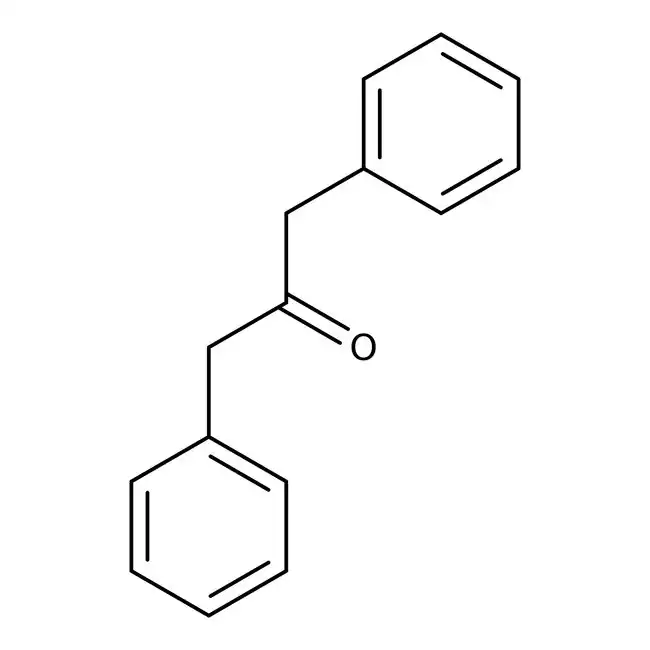
This compound exhibits unique physicochemical properties, including its ability to undergo various chemical reactions such as enolate formation, condensation, and reduction, making it a valuable intermediate in organic synthesis.
Why is 1 3 Diphenylacetone Important?
- Pharmaceutical Applications: Serves as an intermediate in synthesizing pharmacologically active compounds.
- Chemical Research: Used in studying enolate chemistry and aromatic substitution reactions.
- Industrial Synthesis: Acts as a precursor for more complex molecules, including dyes, fragrances, and specialty chemicals.
Given its broad utility, efficient synthesis methods are highly sought after to meet industrial demand and facilitate research developments.
Historical Background and Development
The synthesis of 1 3 Diphenylacetone dates back to early organic chemistry explorations into diketones and their derivatives. Traditional methods involved multi-step reactions with low yields, but advances in catalytic chemistry and reaction optimization have significantly improved the synthesis process.
The synthesis techniques now incorporate modern catalysts, greener solvents, and milder conditions, aligning with sustainable chemistry principles.
Methods of 1,3 Diphenylacetone Synthesis
1. Claisen Condensation Approach
The Claisen condensation remains one of the most prominent methods for synthesizing 1,3 Diphenylacetone. It involves the condensation of benzyl methyl ketone derivatives under basic conditions to form the diketone.
Reaction Overview:
- Starting materials: Benzyl methyl ketone (or related derivatives)
- Conditions: Strong base (e.g., sodium ethoxide), ethanol solvent, controlled temperature
- Outcome: Formation of 1,3 Diphenylacetone after acid work-up
Reaction Scheme:
![Claisen condensation scheme]
This method is favored for its simplicity and high yield when optimized correctly.
2. Benzylation and Oxidation Sequence
Another common synthesis pathway involves benzylation of acetone, followed by oxidation to introduce phenyl groups at specific positions.
Key steps:
- Step 1: Benzylation of acetone using benzyl chloride in the presence of a base
- Step 2: Oxidation of the benzylated acetone to form the target diketone
This method offers control over substitution patterns and can be scaled for industrial production.
3. Friedel–Crafts Acylation
The Friedel–Crafts acylation technique involves acylating benzene rings with acyl chlorides derived from acetone, leading to the formation of phenyl-substituted ketones.
Process:
- Use of aluminum chloride (AlCl₃) as a catalyst
- Reaction of benzene with acyl chlorides in an inert solvent
- Formation of 1,3 Diphenylacetone through subsequent rearrangements
This method is valuable for synthesizing derivatives with specific substitution patterns.
4. Modern Catalytic Methods
Recent advances include the use of metal catalysts such as palladium or copper complexes to facilitate cross-coupling reactions, enabling precise placement of phenyl groups on acetone frameworks.
Advantages:
- Higher selectivity
- Mild reaction conditions
- Reduced by-products
Practical Considerations in 1,3 Diphenylacetone Synthesis
Reaction Conditions
- Temperature: Usually between 50°C to 150°C depending on the method
- Solvent choice: Ethanol, acetic acid, or other polar aprotic solvents
- Catalysts: Sodium ethoxide, AlCl₃, or transition metal complexes
- Reaction time: Ranges from several hours to overnight
Purification Techniques
- Extraction: Using organic solvents
- Recrystallization: From ethanol or other suitable solvents
- Chromatography: For high purity requirements
Safety Precautions
- Handling strong bases and acids with care
- Proper ventilation during reactions involving volatile solvents
- Use of personal protective equipment (PPE)
Applications of 1,3 Diphenylacetone
Pharmaceutical Industry
- Synthesis of bioactive compounds such as analgesics and anti-inflammatory agents
- Precursor in the synthesis of heterocyclic compounds
Chemical Research
- Enolate chemistry studies
- Aromatic substitution reactions
Material Science
- Production of dyes and pigments
- Development of fragrances and flavoring agents
Other Industrial Uses
- Organic intermediates for synthesizing polymers
- Components in specialty chemicals
Environmental and Sustainability Aspects
Modern synthesis methods aim to reduce environmental impact by:
- Using greener solvents
- Employing catalytic processes to minimize waste
- Optimizing reaction conditions for energy efficiency
Adopting sustainable practices ensures the responsible production of 1 3 Diphenylacetone, aligning with green chemistry principles.
Future Perspectives in 1 3 Diphenylacetone Synthesis
Research continues to explore:
- Catalytic methods with higher efficiency and selectivity
- Biocatalytic pathways for greener synthesis
- Novel reaction pathways for complex derivatives
Advancements in nanotechnology and flow chemistry also hold promise for scaling up production while maintaining quality and sustainability.
Alpha-Acetyl Phenylacetoacetonitrile Oil
References and Further Reading
- BMK Oil – Dibenzyl Ketone (1,3 Diphenylacetone)
- Organic synthesis textbooks
- Scientific journals on aromatic ketone synthesis
- Industry reports on chemical manufacturing
Conclusion
The synthesis of 1,3 Diphenylacetone is a vital aspect of organic chemistry with broad applications in pharmaceuticals, materials, and research. Understanding the various synthesis methods—ranging from classical Claisen condensation to modern catalytic techniques—allows chemists to select the most efficient, scalable, and environmentally friendly approach.
By mastering 1,3 Diphenylacetone synthesis, researchers and industry professionals can contribute to advancements in chemical manufacturing, drug development, and sustainable chemistry practices.
Call to Action
If you’re interested in sourcing high-quality 1,3 Diphenylacetone or learning more about its synthesis, visit BMK Oil for detailed product information and professional support.
Note: This comprehensive guide aims to improve your understanding of the synthesis pathways, applications, and significance of 1,3 Diphenylacetone. To ensure your success in chemical synthesis projects, always adhere to safety protocols and consult detailed laboratory procedures.