
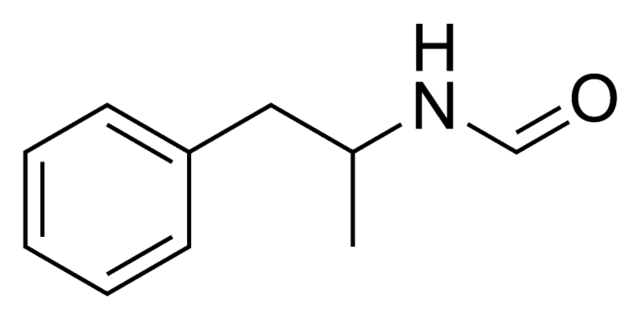
N-Formylamphetamine is a precursor in the synthesis of amphetamine and a potential impurity found in seized amphetamine samples. It is a metabolite of N-cyanomethylmethamphetamine and N-formylmethamphetamine . This product is intended for research and forensic applications.
Formetorex (INN), also known as formetamide or N-formylamphetamine, is a substituted amphetamine described as an anorectic which does not appear to have ever been marketed.
Formetorex is also an intermediate in the production of amphetamine by the “Leuckart reaction.” It is also commonly found as an impurity in clandestine labs where this synthesis method is used. Due to the simplicity of the Leuckart reaction, it is the most popular synthetic route employed for the illicit manufacture of amphetamines.
What Is N-Formylamphetamine Oil?
N-Formylamphetamine is a formyl derivative of amphetamine. In chemistry, adding a formyl group can modify the structure and properties of an organic compound.
The term “oil” generally refers to the physical appearance of certain chemical substances that may exist as liquids under specific conditions. However, the exact physical characteristics of chemical compounds can depend on factors such as purity, temperature, and analytical conditions.
From a scientific perspective, N-formylamphetamine is mainly relevant in:
- Chemical research
- Analytical chemistry
- Forensic laboratory analysis
- Controlled substance investigations
It is not considered a common consumer chemical or general industrial material.
N-Formylamphetamine Chemical Overview
Amphetamine – Leuckart reaction
The synthesis involves a non-metal reduction that is typically carried out in three steps. For amphetamine synthesis, a mixture of phenylacetone and formamide (sometimes in the presence of formic acid) or ammonium formate, is heated until a condensation reaction results in the intermediate product, formetamide. In the second step, formetamide is hydrolysed using hydrochloric acid, and the reaction mixture is then basified, isolated, and steam distilled to produce the free base. The final step, the product is dissolved in an organic solvent and precipitated as the sulphate salt of amphetamine by adding sulfuric acid.


Chemical Classification
N-Formylamphetamine belongs to a group of organic compounds associated with substituted amphetamines.
Key concepts related to its classification include:
- Organic compound structure
- Nitrogen-containing molecules
- Amphetamine-related chemistry
- Laboratory identification methods
Chemists study such compounds to understand molecular behavior, reactions, and analytical characteristics.
Why Is N-Formylamphetamine Discussed?
1. Scientific and Analytical Research
Researchers may examine amphetamine-related compounds to understand:
- Molecular structures
- Chemical transformations
- Detection methods
- Analytical signatures
Advanced laboratories use specialized techniques to identify and characterize chemical substances.
2. Forensic Science Applications
In forensic chemistry, understanding related compounds can help laboratories:
- Identify unknown samples
- Study chemical relationships
- Develop analytical methods
- Support scientific investigations
Forensic laboratories rely on validated testing procedures rather than visual identification alone.
3. Chemical Education
Students and researchers may encounter N-formylamphetamine while learning about:
- Organic chemistry
- Functional groups
- Chemical analysis
- Pharmaceutical chemistry
The compound is an example of how small molecular changes can affect chemical properties.
How Is N-Formylamphetamine Identified?
Professional laboratories use analytical methods to study chemical compounds.
Common analytical approaches in chemistry include:
Chromatography
Chromatographic techniques help separate components within a sample and compare chemical characteristics.
Examples include:
- Gas chromatography
- Liquid chromatography
Spectroscopy
Spectroscopic methods analyze how molecules interact with energy.
Examples include:
- Mass spectrometry
- Nuclear magnetic resonance analysis
- Infrared spectroscopy
These techniques require trained professionals and controlled laboratory environments.
Safety and Regulatory Considerations
Because N-formylamphetamine is associated with controlled-substance chemistry, regulations may apply depending on the country and jurisdiction.
Important considerations include:
- Chemical handling should follow professional safety standards.
- Applicable laws and regulations must be followed.
- Laboratory work involving regulated compounds requires appropriate authorization.
Individuals should not handle unknown chemical substances without proper training and protective measures.
Common Questions About N-Formylamphetamine Oil
Is N-formylamphetamine oil a medication?
No. N-formylamphetamine is not commonly used as a consumer medication. Discussions about it generally relate to chemistry, analysis, and scientific research.
What is the difference between amphetamine and N-formylamphetamine?
The two compounds have related molecular structures, but N-formylamphetamine contains an additional formyl modification. Chemical modifications can change molecular properties and behavior.
Why do researchers study amphetamine-related compounds?
Scientists may study related compounds to improve understanding of:
- Chemical identification
- Molecular structures
- Analytical methods
- Scientific classification
Is N-formylamphetamine dangerous?
Chemical risks depend on factors including exposure route, concentration, handling conditions, and regulatory status. Unknown chemical materials should always be treated cautiously and handled only by qualified professionals.
Where is N-formylamphetamine found?
It is primarily discussed in specialized scientific and forensic contexts rather than everyday commercial applications.
N-formylamphetamine Frequently Asked Questions
What does N-formylamphetamine mean?
N-formylamphetamine refers to an amphetamine-related compound containing a formyl group attached to the nitrogen atom. The name describes its chemical structure.
Is N-formylamphetamine naturally occurring?
It is generally discussed as a chemically related compound rather than a naturally occurring substance commonly found in the environment.
How do laboratories analyze N-formylamphetamine?
Laboratories use professional analytical chemistry techniques, including chromatography and spectroscopy, to identify chemical compounds.
Why is chemical identification important?
Accurate identification helps researchers, scientists, and forensic professionals understand chemical substances and apply appropriate safety and regulatory procedures.
Expert Insights: Understanding Chemical Information Online
When researching specialized chemicals online, it is important to evaluate information quality.
Reliable chemical information should come from:
- Scientific publications
- Professional databases
- Government regulatory sources
- Accredited laboratories
- Peer-reviewed research
Search engines increasingly prioritize content that demonstrates:
- Clear expertise
- Accurate explanations
- Transparent sourcing
- Helpful answers to user questions
Conclusion
N-formylamphetamine oil is a specialized chemical term primarily associated with scientific, analytical, and forensic discussions. Understanding its meaning requires knowledge of chemical structures, laboratory analysis, and regulatory frameworks.
When researching complex chemical topics, accurate scientific sources and responsible interpretation are essential. This helps readers understand chemical terminology while avoiding misinformation and unsafe assumptions.